Contributing to open-source software isn't limited to writing code. Many technical projects require contributions in translation, documentation, feature testing, user experience improvement, and bug reporting. These aspects are essential for the success and sustainability of any open-source project.
Anyone can support open-source projects, even without programming knowledge. For example, you can improve documentation, suggest new ideas, design user interfaces, or help the community by answering questions in forums. These contributions enhance the project's quality and increase its reach.
Understanding how to participate in open-source software opens doors to building a strong digital reputation, gaining practical experience, and connecting with developers from around the world. Every contribution, no matter how small, makes a real difference in the development of free software.
I've benefited greatly from open-source projects over the years. Eventually, I decided to contribute to the field. But what can you do if you've never programmed an application before or don't have the money to contribute? It turns out the answer is: a lot.
I have been using open-source maps for years.
Actually, I abandoned Google Maps in favor of open-source alternatives years ago. There are many options available, but they all rely on the same mapping data: OpenStreetMap. In fact, you might already be using OpenStreetMap without even realizing it. Apple Maps relies on it, as do many other apps that incorporate mapping functionality.
I switched between these apps over time. Initially, I used OsmAnd on my Android phone. While it worked well, its focus on advanced users wasn't suitable for my basic needs. I was overwhelmed by OsmAnd's many advanced features and complex settings, when most of the time I just wanted to get from point A to point B.
That's why I eventually replaced OsmAnd with Organic Maps. The navigation app was much simpler and more focused. However, those familiar with the world of free and open-source software know that Organic Maps app He faced controversy in the summer of 2025 regarding project management and the use of proprietary components. Since then, I've moved on to CoMapsIt is a modified version of Organic Maps that was created in the aftermath of that controversy.
When my friends ride with me, they criticize my use of these alternatives, pointing out that they don't always work perfectly. Some locations, especially home addresses, are difficult to pinpoint accurately. Also, some businesses aren't even listed, making getting their location and directions sometimes complicated. Not to mention the lack of essential features like traffic alerts.
However, I believe the benefits of these open-source alternatives outweigh their drawbacks. I'm willing to tolerate some inconvenience to maintain my privacy and peace of mind.
Finally, I started contributing to the OpenStreetMap project.
After years of relying on OpenStreetMap to navigate my city and country, I decided it was time to give back. Unfortunately, my programming skills are limited to some basic scripting, so contributing to an open-source project seemed daunting. Although I have the financial resources to contribute (and I've found several open-source applications worthy of donations), I wanted to do something more practical.


I also noticed that I had a large number of personal markers in my area in the CoMaps app, which weren't yet included in the official OpenStreetMap data. It turned out that contributing this type of data was easy. In fact, the app I was using for navigation had built-in map editing features that automatically uploaded my edits to the OpenStreetMap system. I was immediately able to start adding my information based on my knowledge of the area where I live and the places I visit.
The best part is that, by contributing, I am helping to solve the problem that my friends used to make fun of me for; by adding data and improving the accuracy of existing data, I am making open-source Google Maps alternatives more viable.
How can you start contributing to your community?
If you're familiar with your area and want to contribute to the world's largest open-source topographic database, the first thing you need to do is visit OpenStreetMap.org and register for an account. Creating an account is simple: just enter your email address, username, and password. Confirm your email, and you'll be ready to start editing. You can then log in to any map editing application, including CoMaps, using this account.
To learn how to edit maps, I found that the easiest and most useful method for beginners is to use the map editor from [Company Name]. OpenStreetMap The code is called iD. Click on the tutorial, and the interactive demonstration will show you how to make each important type of edit, including drawing and editing roads, drawing buildings, and adding points of interest.
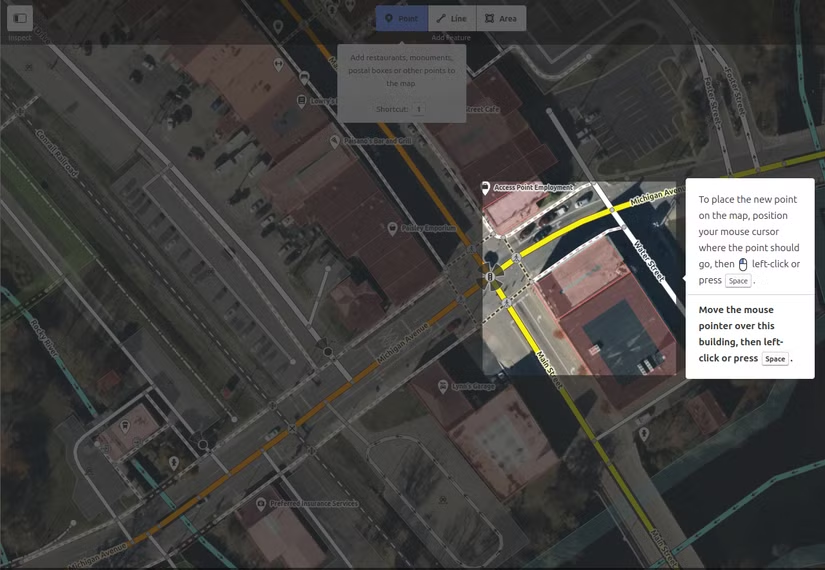
Once that's done, you'll have complete freedom to make any changes you wish. However, other contributors will be reviewing your work, so be sure to read the OpenStreetMap welcome page and its expectations.
I learned a few things quickly. First, not every application can perform all types of map edits; CoMap's editing capabilities are relatively limited. There are other applications, both online and offline, that offer better and easier editing.
Secondly, it's essential to read the OpenStreetMap standards documentation. This way, you avoid making misleading or unhelpful edits by mistake. I made some errors at the beginning, confusing what OpenStreetMap considers a "café" with a café that serves coffee. I'm ashamed to admit that I didn't know the technical difference between a grocery store and a supermarket until I started adding data about them. Nevertheless, I'm educating myself as I contribute.
Not limited to maps only
There are other open-source projects you can participate in without needing to know programming. Just like OpenStreetMap, you can also become Free Wikipedia editor. Or, if you're a music lover like me, you might want to contribute to a database. MusicBrainz For metadata on music.
You can also do nothing; although Folding @ Home While not an open-source database in the strictest sense, running it indirectly on your device allows you to utilize it for medical research. The freedom of open source offers numerous opportunities to contribute to society.
Contributing to open-source software isn't limited to programmers; it's an opportunity for anyone who wants to learn and make an impact. You can start with something simple like improving documentation or reporting a bug, and then gradually develop your contributions.
Choose a project that interests you, read its participation guidelines, and get started today. Your expertise will grow with every contribution, and your professional value will increase with every new experience.