Why does water rise? The best science experiments with water for kids! Looking for one of the best science experiments for kids? Try this popular "Why does water rise?" experiment, which includes some techniques to demonstrate science.
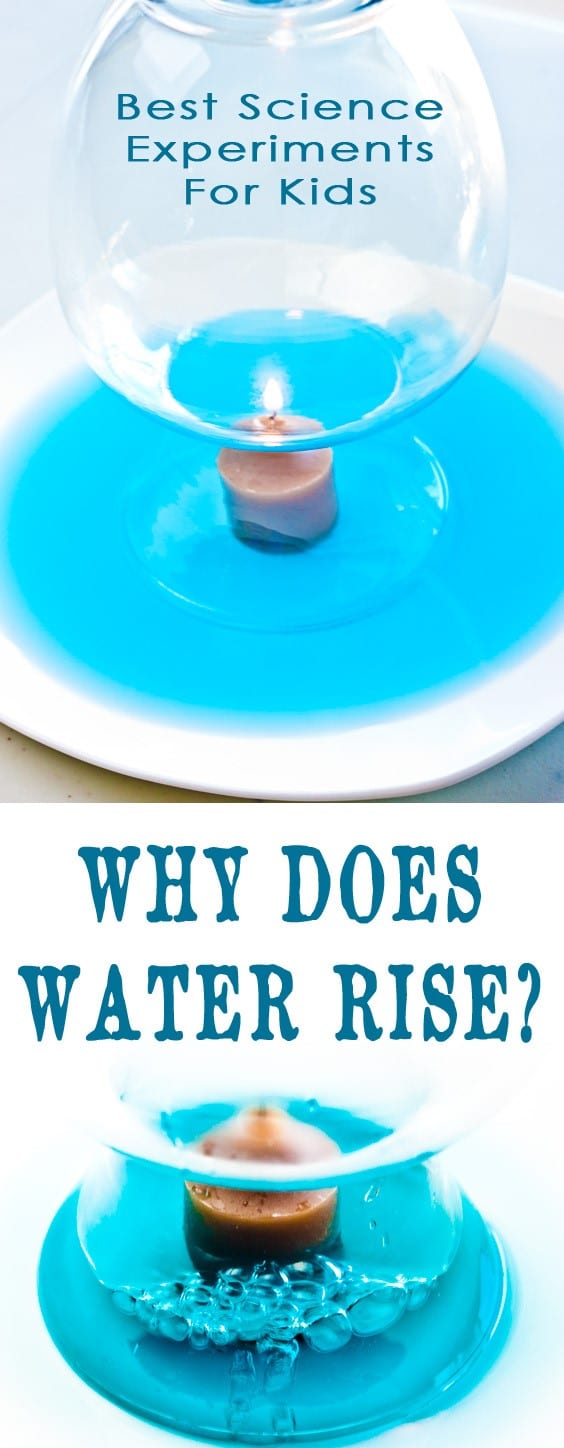
It's like magic, and kids love watching this cool science experiment, but what actually happens when you place a glass over a lit candle in a bowl of water? Set young scientists on a mission to find out. And if you're looking for a science fair idea that's awesome, in our opinion, this is the one!
To conduct this "Why Does Water Rise?" science experiment, you will need:
- - Bowl or plate
- - candle
- Water (adding a few drops of food coloring makes it easier to see what's happening)
- lighter
- Large glass jar (we used a flower vase)
And if you have budding scientists, you'll also need a non-contact digital thermometer. This is a great way to bring some technology to your science and jump into activities.
Simple way:
Place the candle on the plate and pour about 1/2 to 1 cup of water onto the plate. Light the candles, then place the jar (or vase) upside down over the candle.
Then I come back and see one of the best science experiments ever!
I think the younger one was an experience that was magical, and my kids were amazed.
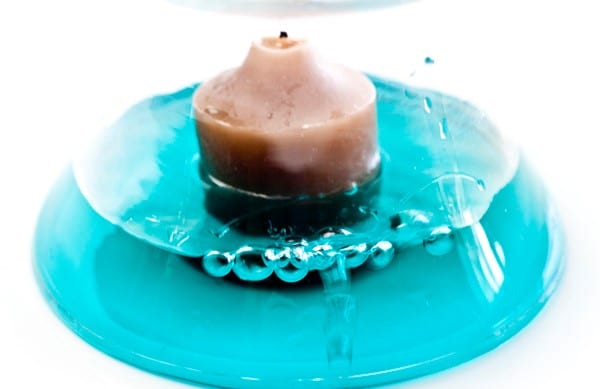
When the candle goes out, all the water is sucked into the jar. The water rises! But why does the water rise?
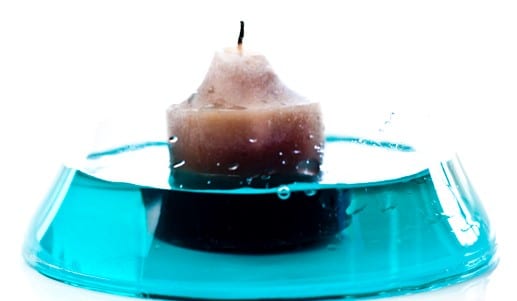
Very quickly, he hypothesized that the hypothesis he had to make with a burning candle was that it used up all the oxygen because the water would rise as soon as the candle went out. He hypothesized that the lack of oxygen caused a change in pressure inside the jar.
He was right that the candle went out because it ran out of oxygen, but that doesn't mean the water is rising, according to our friends at Harvard.


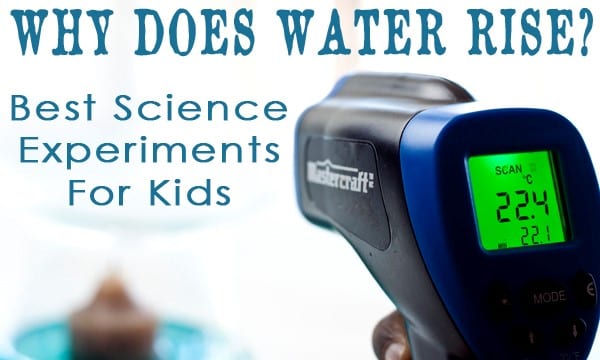
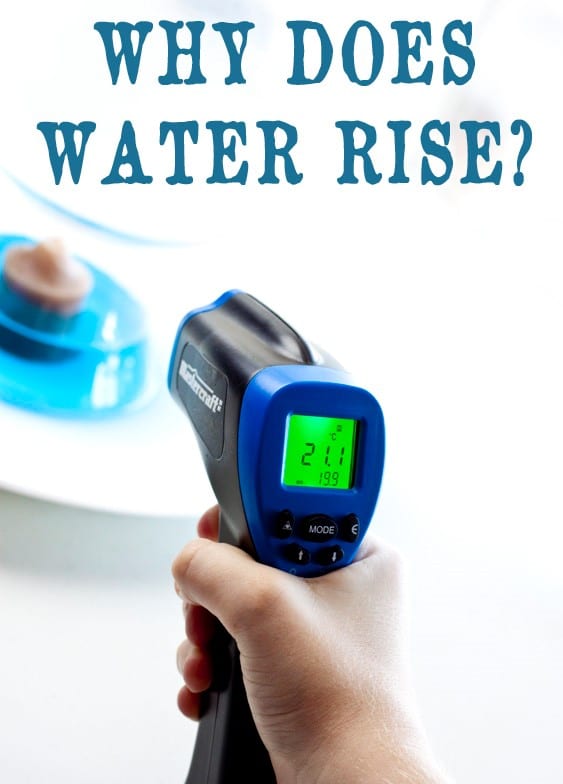
It's time to use the digital thermometer.
We did the experiment again and this time I took the oldest temperature readings.
Very quickly the numbers rose to over 23 degrees Celsius as the candle inside the jar burned.
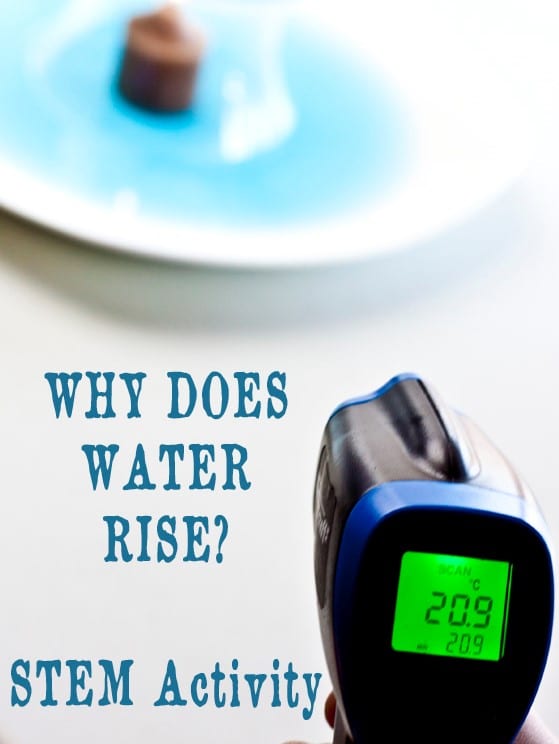
But as the flame weakened, the temperature numbers began to drop. Then the candle went out and the water began to rise. The faster the water rose, the lower these numbers became. Generally, 2 degrees were lost in a few seconds.
The vacuum created was so strong that it sucked in all the water, even creating bubbles as it sucked in the air as well after it pulled all the water out of our dish.
To further explore the scientific concepts of this activity, here are a few variations:
Changing the amount of water you use. How does it affect your results? What is the maximum amount of water you can prepare?
Now change the glass container to something larger or smaller. How does this affect your results? (Hint: We found that a narrow neck gave us the best view of the water rise.)
In the current experiment, three factors combine, each of which contributes to a decrease in air pressure inside the cup, causing the juice (mostly water) to seep into the upturned cup.
The first factor is that when a candle burns, it consumes oxygen from the air and releases water and carbon dioxide into the air during the combustion process. For those interested, we've prepared a detailed explanation of the rate of oxygen consumption in a candle. In modern candles, the wax is usually composed of materials from the alkane/paraffin family—a family of materials composed of only the elements carbon (chemical symbol C) and hydrogen (chemical symbol H). An example of a candle's formula is C25H52 And its combustion process, that is, its reaction with oxygen (O2)
Does changing your candle to a larger or smaller one affect the results?
How does changing the water temperature affect the results?
One of the best science experiments because it demonstrates what happens to a flame when it runs out of oxygen and also how a rapid temperature change can create a vacuum or suction by changing the air pressure inside the jar. Not to mention, it's like magic! It's bound to excite, especially at this science fair. And with all the tweaks and variables you can change, you can make this traditional activity unique.
Take things a step further?
Maybe a little extra step to get us out of the science fair?
Place a lit candle on a clean plate and cover the jar. Once the candle is out, gently lift the jar and light the candle. Try to position the jar over the candle.
what happened?
The candle goes out immediately! Why? Because the air in the jar is still lacking oxygen because it has been completely burned. Blow the jar a few times or stir it to replace the oxygen, then try again. Once you've replaced the exhausted oxygen in the jar, you can place it over the candle again, and it will stay lit until it has burned all the oxygen again.
This was a great side demonstration. Even though we can't see it, the chemical composition of the air inside the jar is changing due to the burning flame, and it takes time and air movement to bring oxygen back into the container. A great way to show that even though we can't see it, science is happening all around us.