Samsung has added an unusual feature to its Samsung SmartThings app that allows users to integrate their computer into their smart home system. This opens the door to new ways of controlling and monitoring home appliances directly from a computer, something that was not common in smart home systems previously.

The new feature transforms the computer into part of a network of connected devices within the home, allowing it to interact with smart lights, sensors, cameras, and other devices linked to the app. This makes the computer an active element in managing the smart system, rather than just a standalone device.
The importance of this addition lies in expanding the concept of centralized control in the smart home. Instead of relying entirely on a phone, users can operate or monitor smart devices while working on their computer, which enhances productivity and provides a more integrated user experience.
As smart home systems continue to evolve, this move appears to be a clear indication of companies’ trend toward integrating personal computers more deeply into connected device systems.
When I began my smart home journey, it was through the Samsung SmartThings platform. I used this platform to control everything from smart switches and thermostats to motion sensors and thermometers. But my latest addition has truly surprised me.
When a screen is more than just a screen…
Screen, TV, and smart home control center
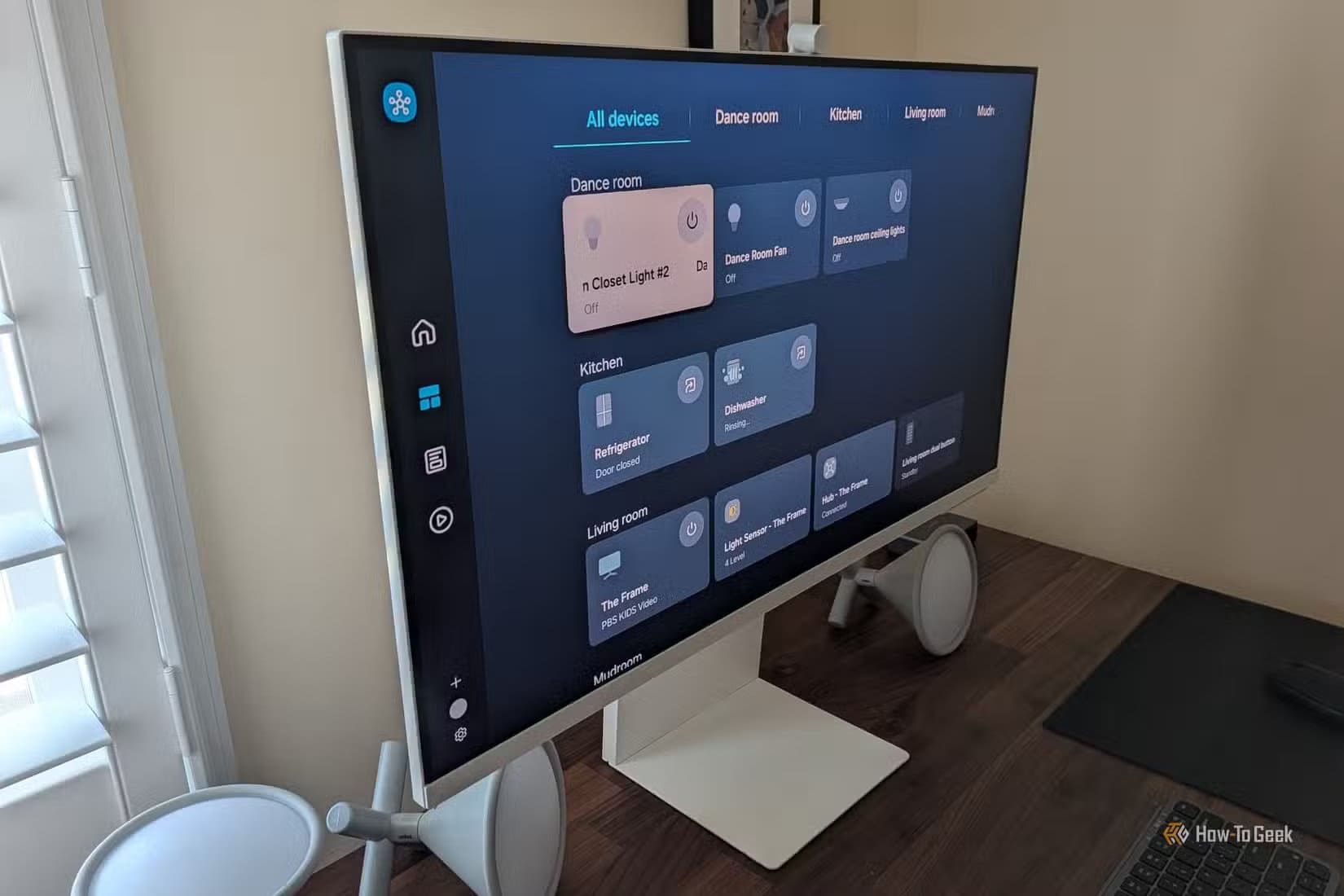
I recently bought a Samsung M8 Smart Monitor. As its name suggests, it’s not a new product. The M8 comes after the M7, which was also a Smart Monitor. The M8 debuted in 2022. My monitor is the latest version, so I’m still receiving the promised seven-year updates, but it’s actually a three-year-old product.
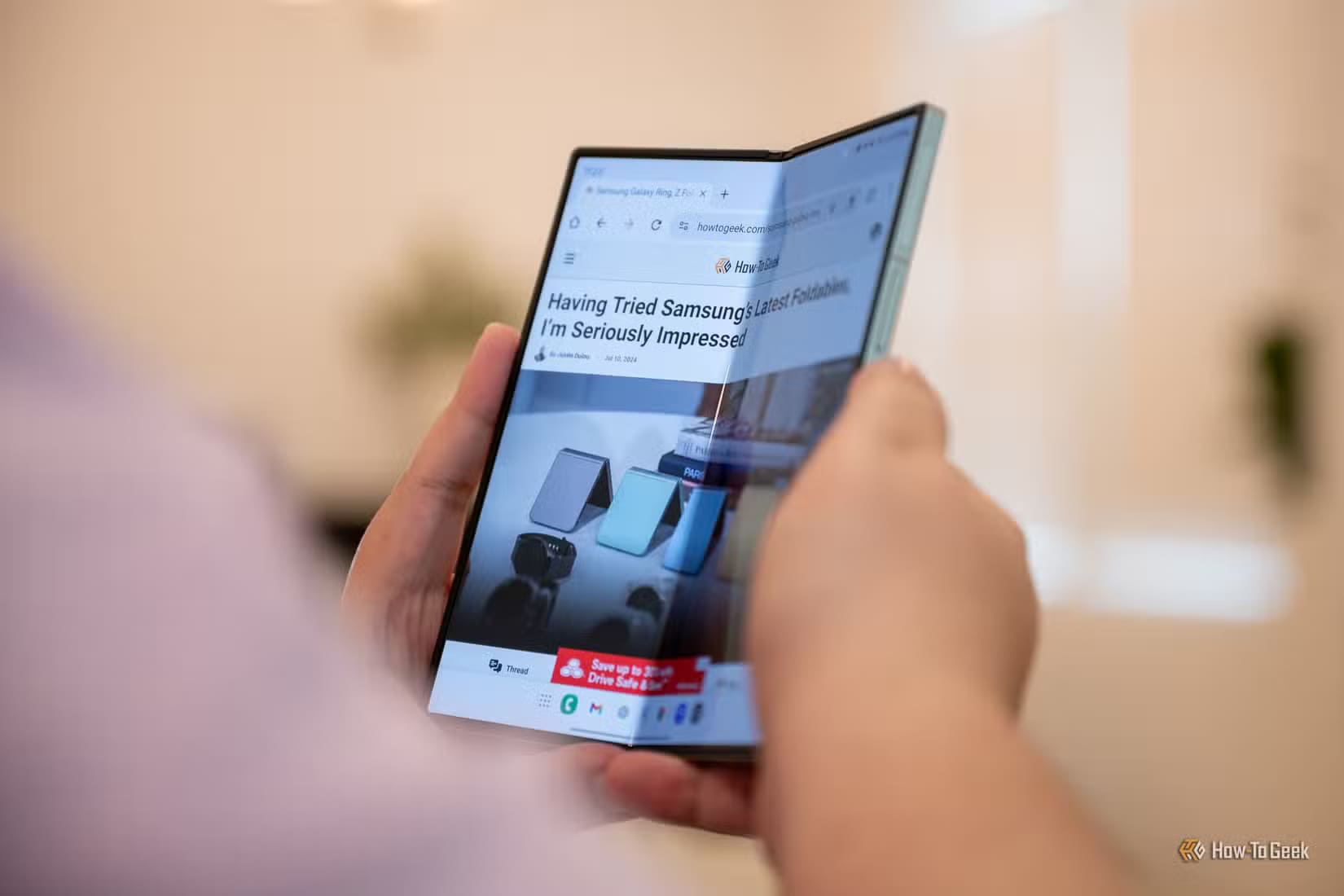
However, none of the people I showed the screen to were aware of this type of product. I work in technology, and I haven’t heard any of my colleagues mention using it. I bet many of you are unfamiliar with the concept either, so let’s explain. The Samsung Smart Display is essentially a TV in the form of a screen, and it comes with a remote control that’s almost identical to the one for the Frame TV mounted on my wall. It runs the same One UI operating system based on Tizen. I can display videos on it, and even mirror my screen, simply by tapping my Galaxy Z Fold 6 against the edge of the display to activate Samsung’s Tap View feature. When I connect my phone via the included USB-C cable, Samsung DeX appears, and I get a 4K desktop (after enabling higher resolution support in the Good Lock app).
As with the Frame TV, this smart display is a control center for smart home devices.
Control your screen using Samsung SmartThings
Are there any benefits to controlling a screen through an app?
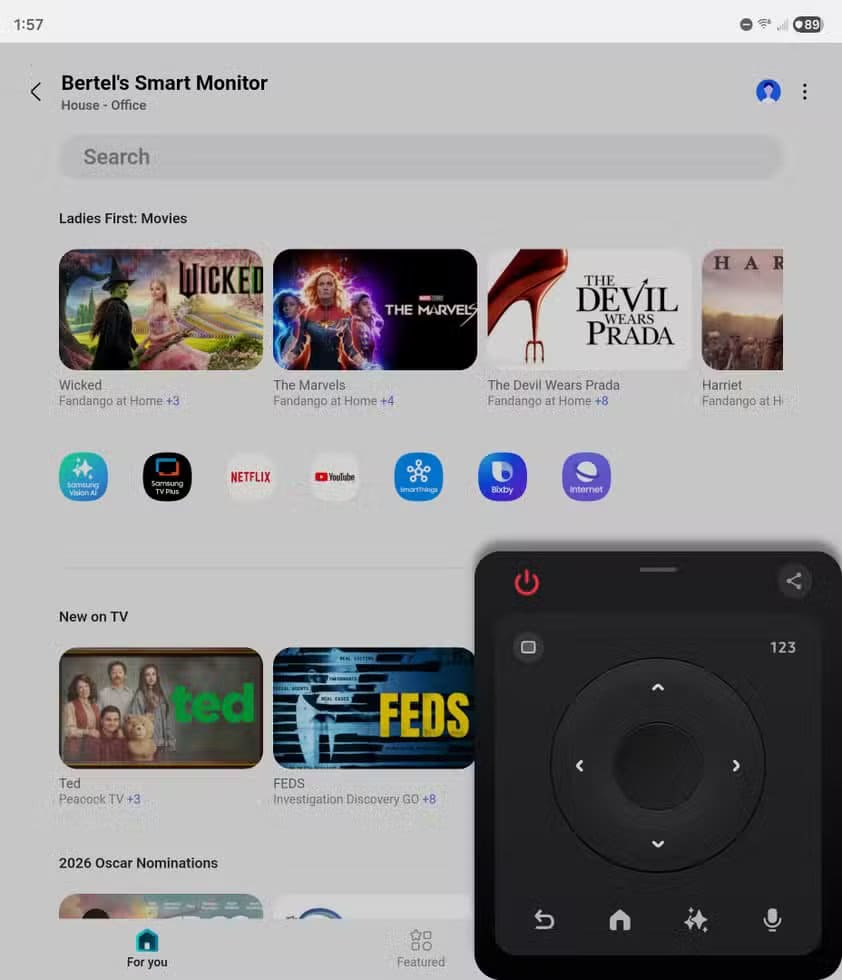
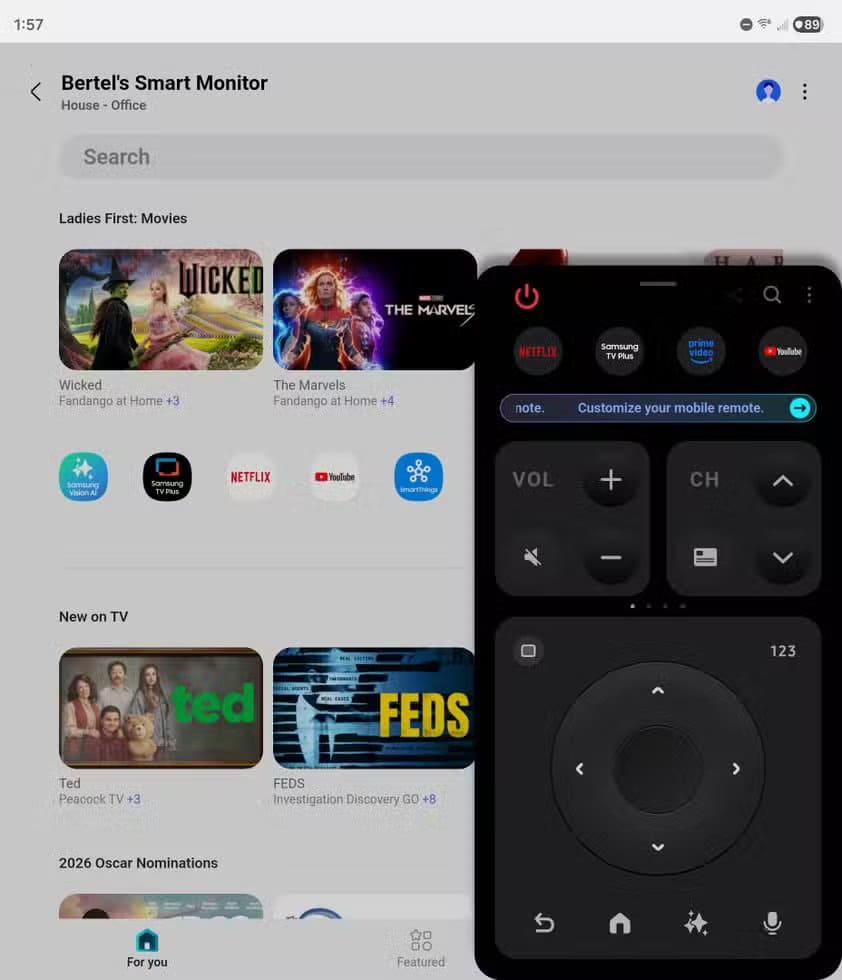
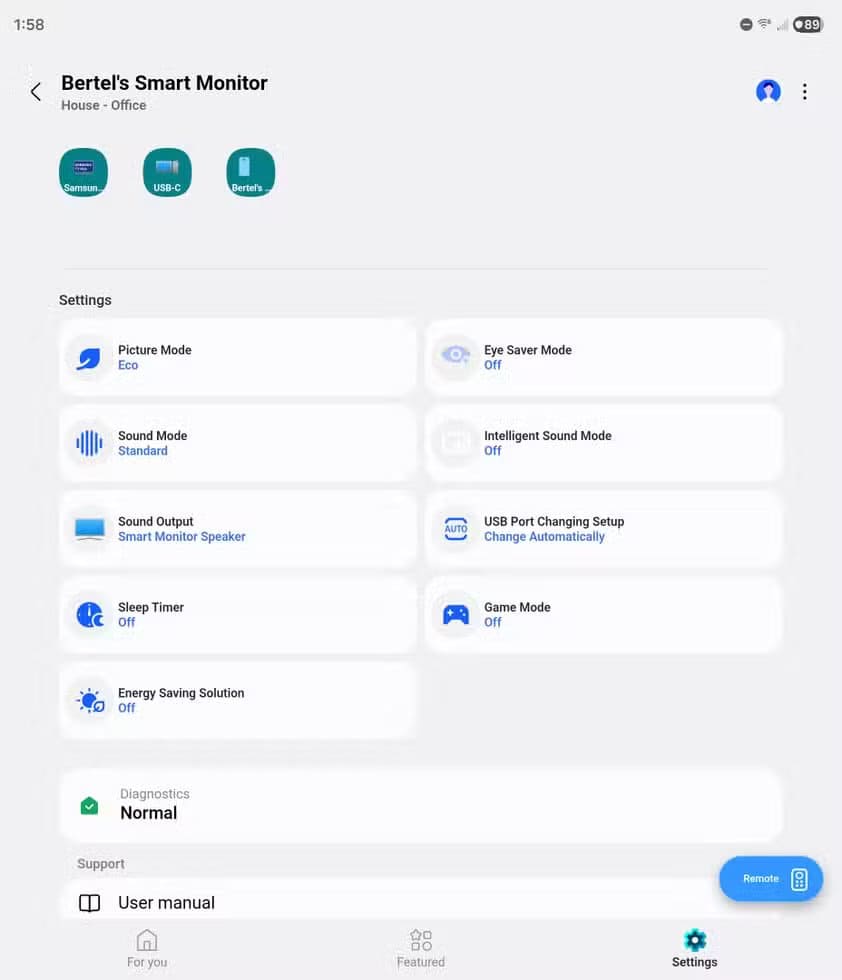
Since the Smart Monitor M8 is essentially a TV that also functions as a monitor, I can use the SmartThings app to control it just like I control my Frame TV. The app acts as a remote control, displaying a virtual control panel and buttons for easy navigation. This feature is fantastic; my wife and I ordered two of these monitors and placed them side-by-side in our shared workspace, which is essentially an IKEA tabletop mounted on desk legs. The remotes included with the monitors control both screens simultaneously, which is incredibly annoying, as you can imagine, when we’re working together at the same time.
The SmartThings app lets us bypass on-screen controls and change settings directly through the app. I can browse programs on my phone to stream them to the screen. I can use my phone as a karaoke microphone or a virtual game controller. And I can remotely turn off the screen if I forget to do so at the end of the workday.
Control your smart home from your office
I am happy to install a central control unit on all devices.
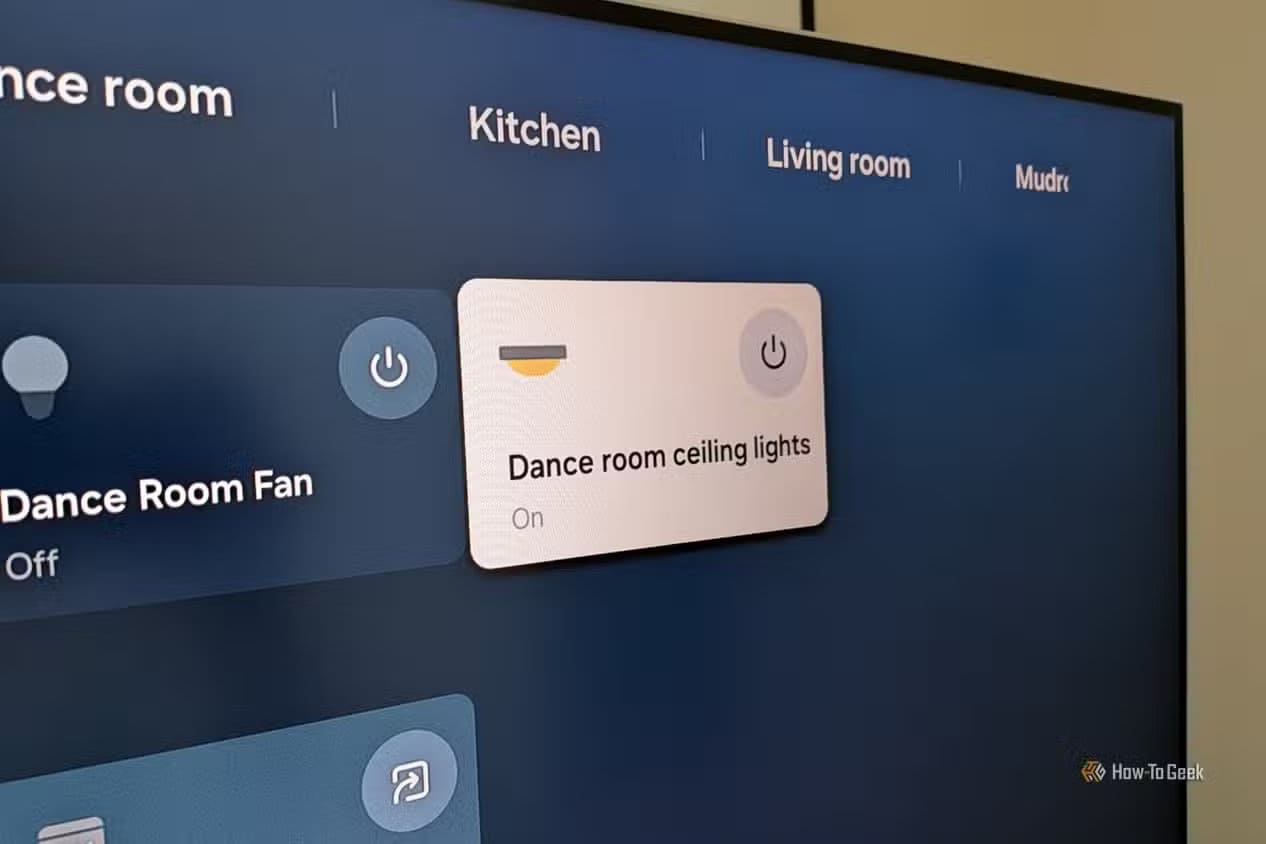
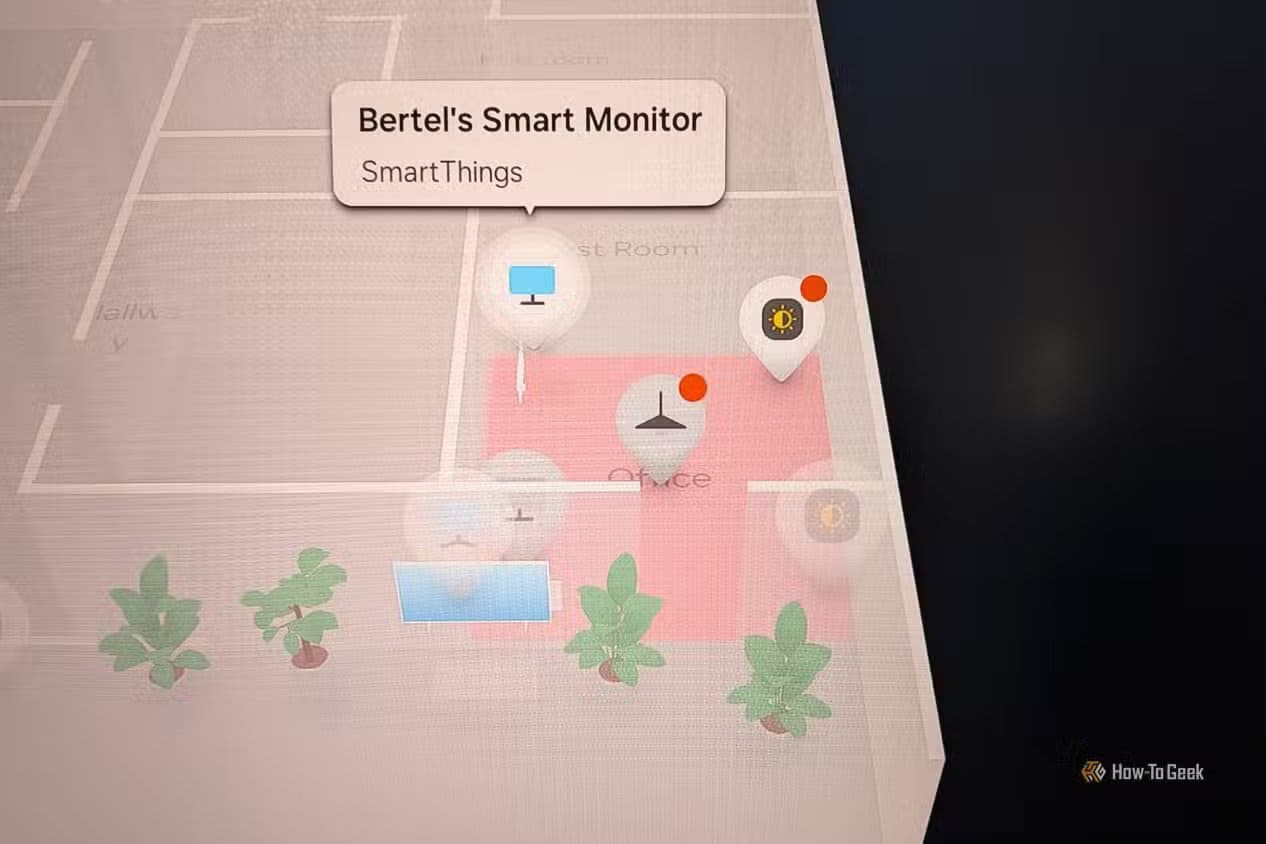
The SmartThings app on my M8 TV is nearly identical to the TV app. It displays all the connected devices in my home, from the Govee floor lamps in the living room to the extractor fan in my kids’ bathroom (connected via a TP-Link Tapo S505 smart switch). These devices appear in a list broken down by room, or they can be accessed via a 3D map. To be honest, I initially thought the second option was just a marketing gimmick, but it’s actually a very easy and intuitive way to control your home, and much faster than scrolling through a list when you have so many connected devices.
The M8 screen acts as a smart home control hub, essential for connecting any smart home devices you’ve purchased to a central app. This hub also functions as a Matter control unit, allowing you to add any Matter device. With built-in Bixby and Alexa assistants, I can control my home using voice commands. Personally, I prefer Bixby.
Even if the screen doesn’t serve as the primary control center, it’s still a valuable addition to a smart home. The screen also acts as a presence sensor by detecting light, motion, and sound. This allows me to create automated systems that activate when I enter a room.
In many ways, the M8 smart display is more than adequate. I wish it had built-in streaming apps back in college, but I’m not as keen on using it as a TV these days. That said, being able to stream video to my screen without a cable is fantastic. And all the smart home features? They’re far superior. If I’d bought it a year ago, it would likely have preceded my TV as the gateway to my smart home, integrated with Matter devices.
Adding PC support within the Samsung SmartThings app is an exciting step towards expanding the smart home concept. Instead of being limited to phones or tablets, connected devices can now be managed more easily from a computer.
If you use a Samsung smart home system, it may be worth trying this new feature to see how it can improve device control and make managing your smart home more flexible and efficient.